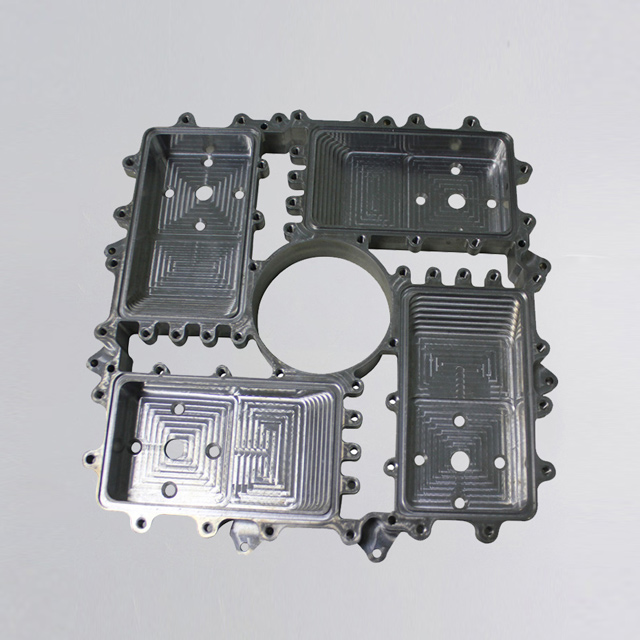
Aluminum is a metal that has been used for centuries. It’s lightweight and corrosion-resistant, which makes it perfect for a variety of applications. CNC milling is a process that uses computer-controlled machines to create precise shapes and designs from aluminum. This process has become increasingly popular in recent years due to its many benefits.
CNC milling is a process that is used to create precise shapes and designs from aluminum. It is a popular choice for many businesses because it is cost-effective and efficient. CNC milling is also a great option for businesses that need large quantities of aluminum parts, as it can produce them quickly and accurately.
When it comes to CNC milling, there are many factors that will affect the cost. The type of aluminum being used, the size of the part, the complexity of the design, and the quantity needed are all important considerations. In this article, we will take a closer look at each of these factors and how they impact the cost of CNC milling.
The type of aluminum being used
There are many different types of aluminum that can be used in CNC milling. Each type has its own unique set of properties that make it ideal for certain applications. The most common types of aluminum used in CNC milling are6061, 7075, and 5052.
6061 aluminum is the most commonly used type in CNC milling. It is a versatile material that can be used for a wide variety of applications.6061aluminum is strong and durable, yet lightweight, making it perfect for parts that need to be both strong and light. It is also resistant to corrosion, which is important for parts that will be used in harsh environments.
7075 aluminum is another popular choice for CNC milling. It is even stronger than6061aluminum, making it ideal for parts that need to withstand a lot of stress.7075aluminum is also resistant to corrosion, but it is not as versatile as6061aluminum and can be more difficult to work with.
5052aluminum is a less common choice for CNC milling, but it has its own unique set of benefits.5052aluminum is more malleable than6061and7075, making it easier to work with. It is also resistant to corrosion and has a high strength-to-weight ratio, making it a good choice for parts that need to be both strong and light.
The size of the part
When it comes to CNC milling, the size of the part is another important factor that will affect the cost. Larger parts will take longer to mill and will require more material, which will increase the overall cost. Conversely, smaller parts will be less expensive to mill.
In general, CNC milling is most cost-effective for parts that are between 1 and 10 inches in size. Parts that are larger than 10 inches can still be milled, but the cost will increase significantly. Parts that are smaller than 1 inch can also be milled, but they may require special tooling and setup, which will also increase the cost.
The complexity of the design
The complexity of the design is another important factor that will affect the cost of CNC milling. Simple designs can be milled quickly and easily, which will keep costs down. More complex designs will take longer to mill and will require more setup time, which will increase the overall cost.
In general, CNC milling is most cost-effective for parts with simple designs. Parts with complex designs can still be milled, but the cost will increase significantly. This is because complex designs require more time and effort to create, and they often require special tooling and setup.
The quantity needed
The quantity needed is the last factor that will affect the cost of CNC milling. In general, the more parts that are needed, the lower the cost per part will be. This is because the setup time and material costs are spread out over a larger number of parts.
However, there is a point at which the cost per part will start to level off. This is because there are fixed costs associated with CNC milling, such as the cost of the machine and the labor. Once the number of parts needed exceeds a certain threshold, the cost per part will not decrease any further.
In general, CNC milling is most cost-effective for quantities between 100 and 1000 parts. For quantities below 100, the cost per part will be relatively high because of the fixed costs associated with CNC milling. For quantities above 1000, the cost per part will level off and will not decrease any further.
Conclusion
In conclusion, there are many factors that will affect the cost of CNC milling aluminum. The type of aluminum being used, the size of the part, the complexity of the design, and the quantity needed are all important considerations. By taking these factors into account, businesses can get a better understanding of how much CNC milling will cost and can make more informed decisions about whether or not to use this process.