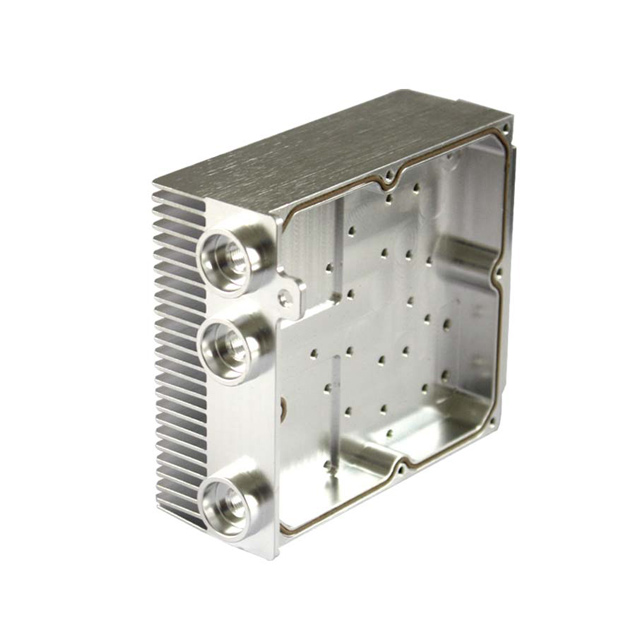
CNC milling machines are an essential part of modern manufacturing, allowing for precise and efficient production of complex parts and components. With the ability to automate the milling process, these machines have revolutionized the way we design and create products, making it possible to produce high-quality parts with a high degree of accuracy and consistency. In this article, we will explore the key features and capabilities of CNC milling machines, and discuss how they are changing the face of manufacturing as we know it.
What is CNC milling?
CNC milling is a manufacturing process that uses computer-controlled machines to remove material from a workpiece to create a desired shape or finish. CNC milling machines are designed to perform a variety of tasks, including drilling, cutting, and shaping materials such as metal, plastic, and wood.
The process begins with the creation of a computer-generated design (CAD) model, which is then translated into machine instructions using computer-aided manufacturing (CAM) software. The CNC milling machine then follows these instructions to remove material from the workpiece using a cutting tool, which is typically mounted on a rotating spindle.
CNC milling machines are known for their precision and accuracy, which is achieved by using advanced positioning systems and feedback mechanisms to ensure that the cutting tool follows the desired path with a high degree of accuracy. This allows for the creation of complex shapes and features, such as grooves, pockets, and contours, with a high level of detail.
Overall, CNC milling is a versatile and efficient manufacturing process that is widely used in a variety of industries, including aerospace, automotive, and electronics. It is particularly useful for producing parts with tight tolerances and complex geometries, and is an essential tool for modern manufacturing.
What does a CNC milling machine do?
A CNC (Computer Numerical Control) milling machine is a type of CNC machine that is used to remove material from a workpiece to create a desired shape or finish. CNC milling machines are designed to perform a variety of tasks, including drilling, cutting, and shaping materials such as metal, plastic, and wood.
The process begins with the creation of a computer-generated design (CAD) model, which is then translated into machine instructions using computer-aided manufacturing (CAM) software. The CNC milling machine then follows these instructions to remove material from the workpiece using a cutting tool, which is typically mounted on a rotating spindle.
The cutting tool is moved along the surface of the workpiece using a series of linear and/or rotary axes, which are controlled by the CNC system. The CNC system uses advanced positioning systems and feedback mechanisms to ensure that the cutting tool follows the desired path with a high degree of accuracy.
CNC milling machines are known for their precision and accuracy, which allows for the creation of complex shapes and features, such as grooves, pockets, and contours, with a high level of detail. They are also capable of producing parts with tight tolerances, making them a popular choice for industries such as aerospace, automotive, and electronics.
Types of CNC milling machines
CNC (Computer Numerical Control) milling machines are available in a variety of types and configurations, each designed to meet specific needs and requirements. Here are some of the most common types of CNC milling machines:
Vertical CNC milling machines:Vertical CNC milling machines are the most common type of CNC milling machines. In these machines, the spindle is oriented vertically, and the cutting tool is mounted on the spindle. The workpiece is typically mounted on a table that can be moved in the x and y directions. Vertical CNC milling machines are commonly used for drilling, boring, and face milling operations.
Horizontal CNC milling machines:Horizontal CNC milling machines have a horizontal spindle orientation, and the cutting tool is mounted on the spindle. The workpiece is typically mounted on a table that can be moved in the x and y directions. Horizontal CNC milling machines are commonly used for milling operations that require a larger workpiece or for machining multiple surfaces in a single setup.
Universal CNC milling machines:Universal CNC milling machines are versatile machines that can be used for a wide range of milling operations. These machines typically have a vertical and horizontal spindle orientation, and the workpiece can be rotated on a rotary table. Universal CNC milling machines are commonly used in job shops and for prototyping.
5-axis CNC milling machines:5-axis CNC milling machines are advanced machines that can move the cutting tool in five different axes. These machines can move the cutting tool in the x, y, and z directions, as well as rotate the tool around the x and y axes. 5-axis CNC milling machines are commonly used for complex machining operations, such as aerospace and automotive applications.
High-speed CNC milling machines:High-speed CNC milling machines are designed for high-speed machining operations. These machines typically have a spindle speed of 20,000 RPM or higher, and they are commonly used for machining small parts and for applications that require high precision.
These are just a few examples of the many types of CNC milling machines that are available. Each type of machine has its own strengths and weaknesses, and the choice of machine depends on the specific needs of the application.
Applications of CNC milling machines
CNC (Computer Numerical Control) milling machines are used in a wide range of industries and applications due to their precision, efficiency, and versatility. Here are some common applications of CNC milling machines:
Aerospace industry:CNC milling machines are used to manufacture complex components for aircraft, spacecraft, and satellites. These components require high precision and tight tolerances to ensure safety and performance.
Automotive industry:CNC milling machines are used to produce engine components, transmission parts, and other critical automotive parts. They are also used for prototyping and producing custom parts for automotive design and development.
Medical industry:CNC milling machines are used to manufacture surgical instruments, dental implants, orthopedic implants, and other medical devices. These components require high precision and biocompatibility.
Electronics industry:CNC milling machines are used to produce components for electronic devices, such as circuit boards, heat sinks, and enclosures. They are also used for prototyping and custom design in electronics development.
Industrial machinery:CNC milling machines are used to manufacture components for industrial machinery, such as gears, shafts, and housings. They are also used for prototyping and custom design in industrial machinery development.
Consumer products:CNC milling machines are used to produce components for consumer products, such as appliances, furniture, and toys. They are also used for prototyping and custom design in consumer product development.
Art and sculpture:CNC milling machines are used to create intricate designs and sculptures in materials such as stone, wood, and metal. They are also used for creating custom signage and architectural features.
These are just a few examples of the many applications of CNC milling machines. The versatility and precision of these machines make them an essential tool in many industries and applications.
Conclusion
CNC (Computer Numerical Control) milling machines are powerful tools that are widely used in modern manufacturing. These machines use computer-controlled cutting tools to remove material from a workpiece to create a desired shape or finish. CNC milling machines are known for their precision and accuracy, and they are used in a wide range of industries and applications, including aerospace, automotive, medical, electronics, industrial machinery, and consumer products.
There are several types of CNC milling machines, including vertical, horizontal, universal, 5-axis, and high-speed machines. Each type of machine has its own strengths and weaknesses, and the choice of machine depends on the specific needs of the application.
CNC milling machines are used to manufacture complex components with tight tolerances, and they are also used for prototyping and custom design. The versatility and precision of these machines make them an essential tool in many industries and applications.


